The “Problems in Precision Medicine and Genomics” sessions aim to advance groundbreaking research opportunities while fostering cross-campus connections in an informal discussion-based setting.
Sessions take place the first Monday of every other month, from 12:00 PM to 1:00 PM.
Dr. Skop’s laboratory explores the molecular mechanisms of cell division, with a special focus on the midbody and midbody remnants (MBRs)—unique, RNA-rich structures produced during mitosis. Current research projects include identifying the RNA cargo of midbody remnants in various cell types and investigating their roles in cancer progression and neurodevelopmental disorders. Dr. Skop is also widely recognized for her work in scientific outreach, diversity in STEM, and the integration of science and art.
The session will be held in-person in WIMR West Wedge 2798 and Gen-Biotech 5406. Attendees can also join via Zoom.*
*Please note: You must register with an @wisc.edu domain to attend virtually.
June 1st PPMG Speaker
Filiz Yesilikoy, PhD
Title TBD
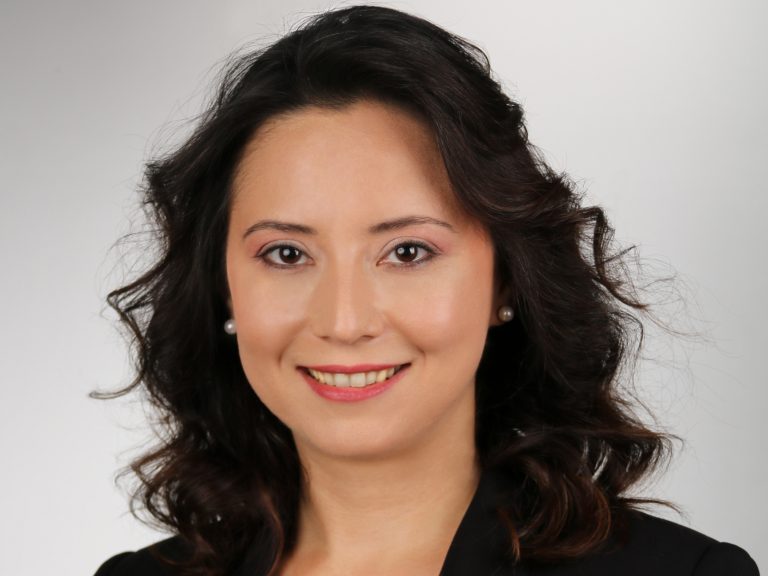
April 6th PPMG Speaker
Ahna Skop, PhD
Title TBD

Dr. Filiz Yesilikoy is an Assistant Professor in the Department of Biomedical Engineering. Her group conducts basic, applied, and translational research at the cross-sections of photonics, nanotechnology and biomedical sciences towards the development of novel instruments that will impact next-generation healthcare practice and foundational biomedical research.
The session will be held in-person in WIMR West Wedge 2798 and Gen-Biotech 5406. Attendees can also join via Zoom.*
*Please note: You must register with an @wisc.edu domain to attend virtually.
The UW-Madison Center for Precision Medicine and Center for Genomic Science Innovation (CGSI) are launching a new series to bridge campus clinicians, translational researchers, and basic scientists around specific research challenges in medicine and genomics.
Each bi-monthly session will host a 30 minute faculty presentation on a challenge or opportunity in their research, followed by a 30 minute open discussion on possible solutions, relevant methods, or campus resources. A key goal is to bridge campus researchers through stimulating brainstorming sessions that will also advance specific challenges posed by the faculty member.
“These round table sessions are a chance to connect our vibrant community dedicated to advancing genomics, multi-omics, and precision medicine research at UW. I hope these discussions will seed new collaborations and eventually lead to multidisciplinary solutions that address clinical gaps,” says Center for Precison Medicine Director Muhammed Murtaza.
Sessions might include clinicians looking to connect with basic scientists to test specific hypotheses, researchers interested in forming translational connections, or scientists with new methods or approaches interested in applications.
Faculty can submit requests to present a specific challenge related to their research or clinical practice, focusing on topics that either involve or could be addressed using genomic technologies and computational analysis. Anyone is welcome to attend the sessions. The Centers will also invite relevant audience members from campus who may have particular scientific interest of overlap.
“I think these think-tank discussions will also be a great opportunity for trainees, both to hear about modern challenges in clinical genomics and to be part of discussions to solve them,” says CGSI Director Audrey Gasch.
The Centers envision hosting two discussion rooms, at Center for Precision Medicine on the West end of campus and one in CGSI on the East side, connected by video streaming, with in person presentations alternating between locations throughout the series.
Past Seminars
2026
This is an accordion element with a series of buttons that open and close related content panels.
January 2026 - Bryn Webb, MD, FACMG and Nistha Panda, MS
Bryn Webb, MD, FACMG, is an Associate Professor in the Department of Pediatrics and the Division of Genetics & Metabolism and Director of the UW Undiagnosed Disease Program (UW-UDP). Nistha Panda is a Master’s Student in Dr. Anthony Gitter’s lab in the Department of Biostatistics and Medical Informatics.
“Improving Variant Interpretation Through Collaboration in the UW Undiagnosed Disease Program”
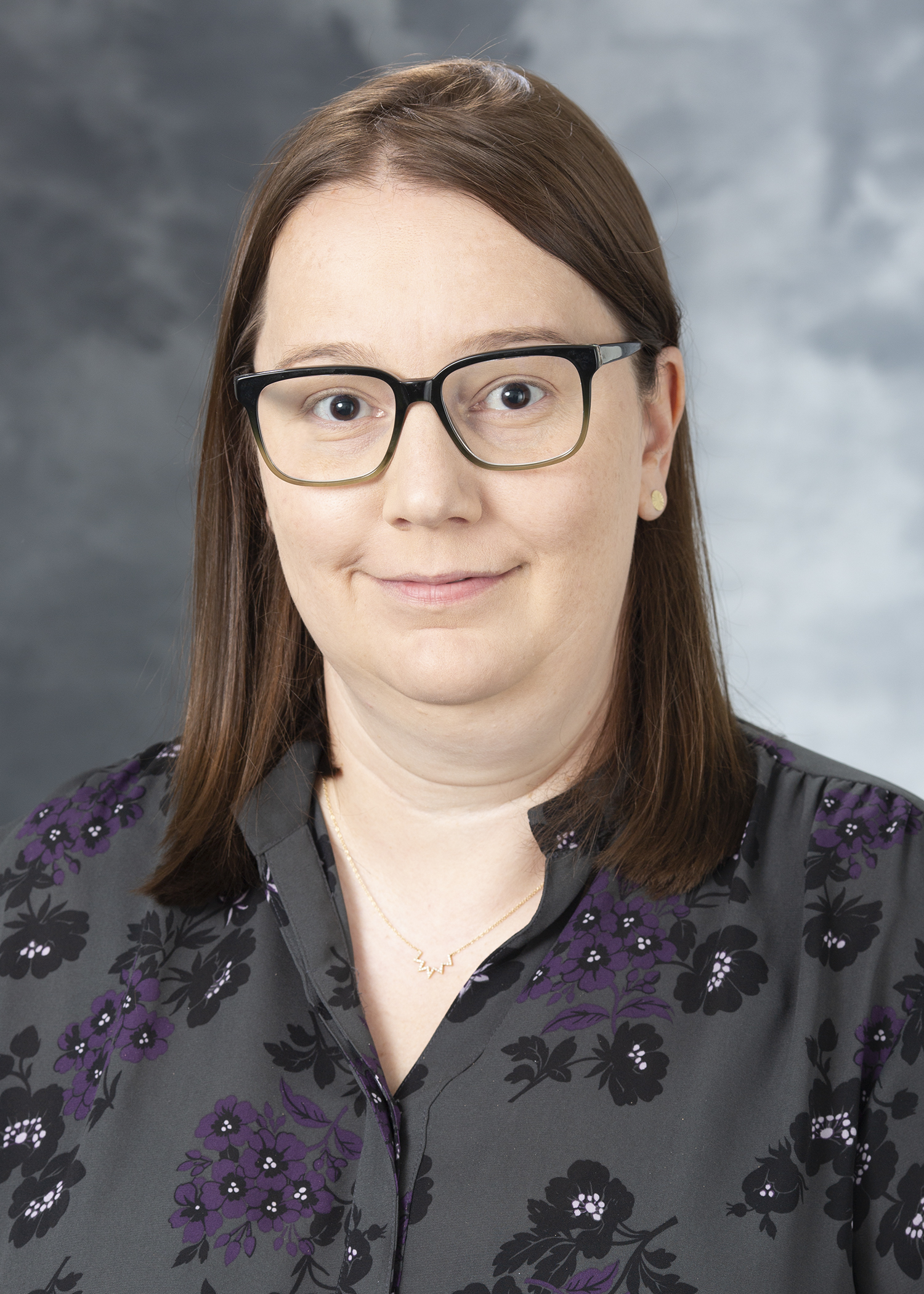

Dr. Webb and Nistha are collaborators on a project in the UW-UDP that focuses on improved variant interpretation through computational processes.
2025
This is an accordion element with a series of buttons that open and close related content panels.
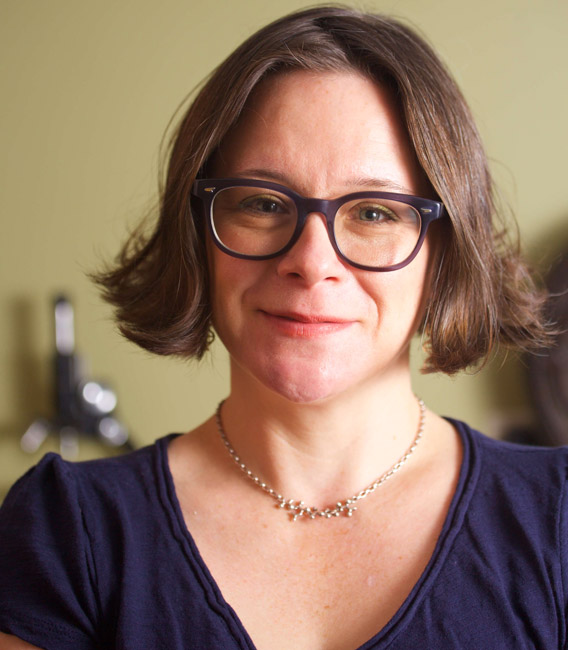
December 2025 - Audrey Gasch, PhD, Professor of Genetics and Director of the Center for Genomic Science Innovation (CGSI)
Audrey Gasch, PhD, Professor of Genetics and Director of the Center for Genomic Science Innovation (CGSI).
“Adding dimensions: how to analyze genomic screens done across many genetic backgrounds?”
Research Interests
Dr. Gasch’s research focuses on understanding the principles of eukaryotic environmental-stress defenses by integrating novel approaches in functional and comparative genomics, computational analysis, systems biology, and genetics and molecular analysis to understand how cells sense and respond to stress.
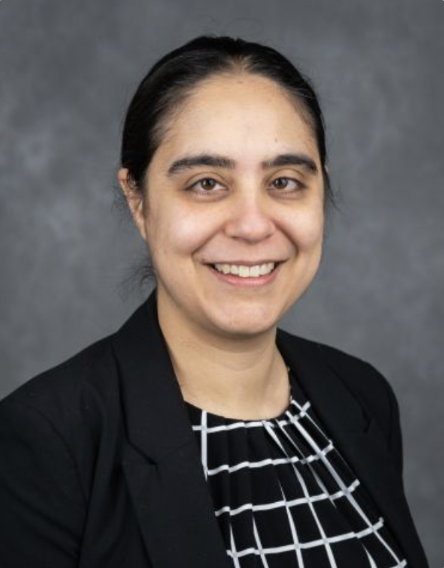
August 2025 - Marina Sharifi, MD, PhD, Assistant Professor, Hematology, Medical Oncology, Palliative Care.
Marina Sharifi, MD, PhD, Assistant Professor in Hematology, Medical Oncology, and Palliative Care.
“Leveraging liquid biopsies to interrogate molecular evolution in advanced cancers: challenges and opportunities”
Research Interests
Dr. Sharifi’s research focuses on leveraging liquid biopsies including circulating tumor cells and circulating tumor DNA to detect, understand and overcome mechanisms of targeted therapy resistance in breast and prostate cancer.
June 2025 - Stephanie McGregor, MD, PhD, Assistant Professor, Genetics.
Stephanie McGregor, MD, PhD
Associate Professor (CHS), Vice Chair of Clinical and Translational Research, Director of Translational Science Biocore, UW BioBank
“WiscShare: A Framework for Optimizing Use of Human-Derived Biospecimens in Biomedical Research”

Research Interests
Data-driven classification of breast and gynecological cancers through integration of tumor biology and reproducibility, promotion of precision medicine through biomarker development, and interactions between immunity and malignant transformation with respect to disease progression and response to treatment.
April 2025 - Donna Werling, Ph.D, Assistant Professor, Genetics.
Donna Werling, Ph.D, Assistant Professor, Genetics.
“Many brain disorders have sex-biased prevalence. Why is it so challenging to find sex-differential genomic signals in brain?”
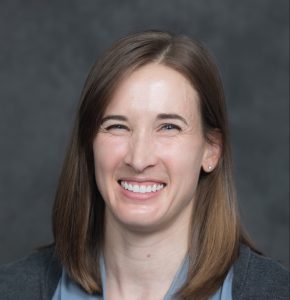 Genetic variants contribute to risk for neurodevelopmental disorders, many of which show sex differences in their prevalence or presentation. This suggests a potential role for sex-differential biology in modulating the impact of genetic and other risk factors, such that one sex is sensitized and/or the other is protected from risk. One particularly striking example is autism spectrum disorder (ASD): Males are diagnosed with ASD at least three times more frequently than females, and this skew is one of the most consistent, yet mechanistically unexplained, features of ASD.
The aim of my research is to understand the key neurobiological mechanisms involved in the etiology of ASD and other neurodevelopmental disorders, including genetic and developmental processes, with a focus on the role of sex-differential biology in modulating risk. Genome-scale analyses are especially powerful for unbiased discovery, and so my lab uses genome-wide genetics, functional genomics, and bioinformatics approaches (e.g. RNA-seq, single cell analyses, eQTLs) in human tissue and model systems to identify and characterize the mechanisms involved in sex-differential and disorder-associated neurobiology. The long-term goal of this research program is to uncover fundamental etiological pathways in both sexes that will facilitate treatment development and benefit affected individuals and their families.
Prior to April 2025, this series was preceded by the Precision Medicine Interest Group. Information on those speakers can be found here.